





Prop Firm Rule-Version Audit: Which Terms Apply to Your Account?
Match the exact provider, programme, stage and dated account evidence before interpreting a rule.

On this page

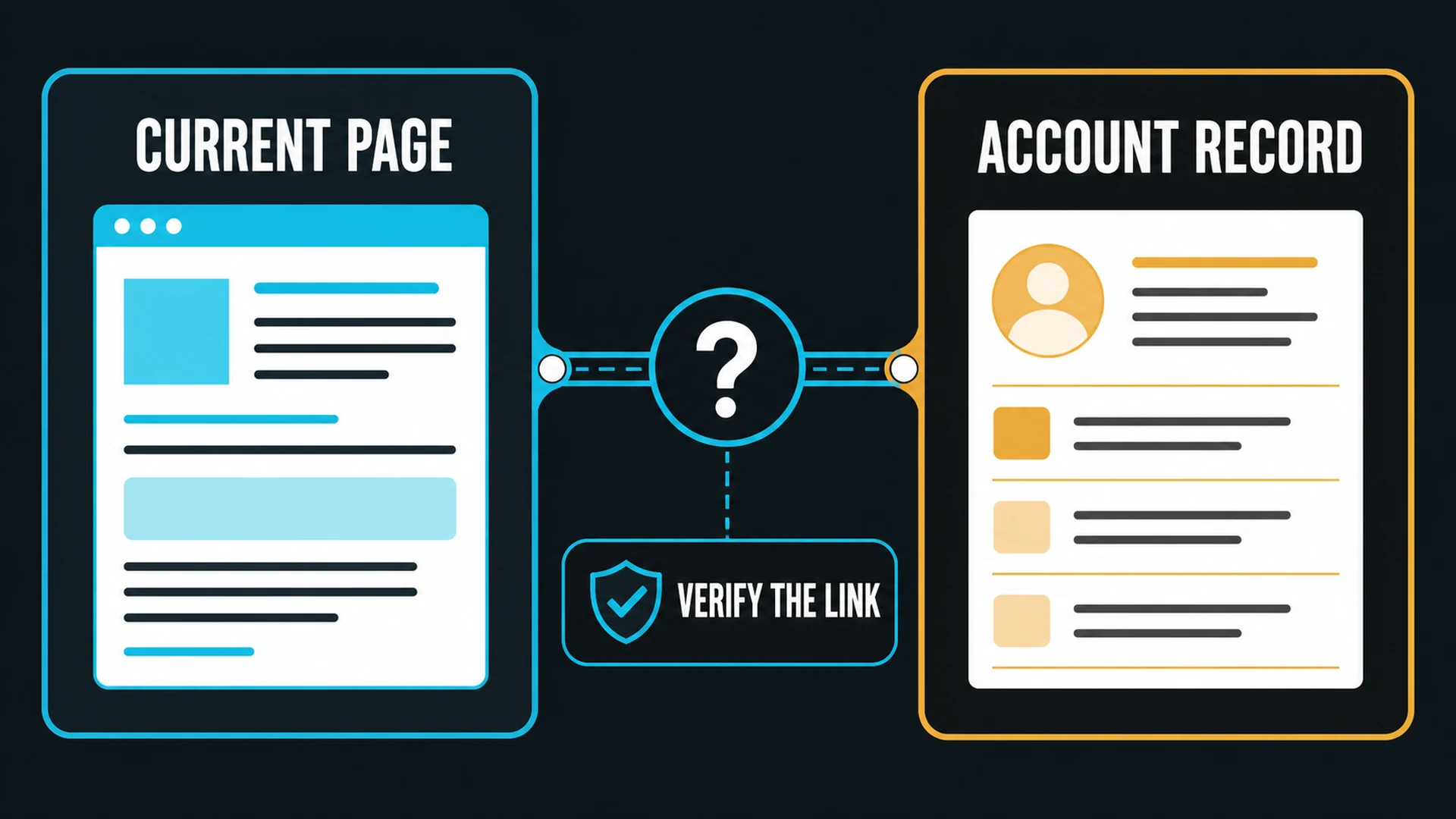
A prop-firm rule-version audit matches the exact provider, programme, account stage and relevant purchase or activation evidence before interpreting a rule. A current public page proves what the provider displays now; it does not automatically prove the terms attached to your account. Preserve the page, account record and official response as separate evidence layers, compare only like with like, and leave unresolved conflicts unresolved.
- Name the exact provider, programme and stage.
- Keep public-page and account evidence separate.
- Record purchase, activation, update and retrieval dates distinctly.
- Leave conflicts unresolved until reliable evidence addresses them.
Start with education that separates programme terms, challenge rules and account-specific evidence. A general guide can explain the vocabulary, but it cannot determine which version governs an individual account or replace official provider confirmation. Scalping Wolf Live’s registered prop-trading guide provides the closest first-party foundation for that learning task. Read the prop-trading guide gives the relevant next learning step.
You reopen a provider page and the wording looks different from the notes you saved. That can feel urgent, especially when a percentage, stage label or payout condition appears to have moved. Yet the quickest conclusion is often the least reliable one. The newest page might describe another product, another stage or a path you never selected.
This guide gives you a practical evidence card, a like-for-like comparison method and a precise support-question template. It uses four first-party pages freshly reopened on 24 August 2026, but every fact remains limited to the named provider, programme and stage. It does not decide a contract, account status, trading action, payout request or future outcome.
Current Pages Need Account Context
Why might the newest page not settle applicability?
Section answer: A current provider page records current public wording, not necessarily the terms attached to one account. Match it to the exact provider, programme, stage and any provider-stated purchase, activation or path qualifier. If those account facts are missing or conflicting, applicability remains unresolved.
The four reopened pages separate rules by product, programme or phase. Blueberry Funded distinguishes 1-Step from Flex 1-Step, Phoenix Trader Funding separates programmes across stages, Topstep separates Trading Combine from Express Funded Account paths, and FTMO separates 1-Step from 2-Step objectives.
Evidence layer: Current public page · What it can show: Current provider wording · What it cannot prove alone: Terms attached to one account
Evidence layer: Purchase record · What it can show: Product and purchase context · What it cannot prove alone: Later stage or selected path
Evidence layer: Account dashboard · What it can show: Current displayed account details · What it cannot prove alone: Contractual priority
Evidence layer: Support response · What it can show: Provider answer to a precise question · What it cannot prove alone: Market-wide practice
Keep that boundary visible, because the next task is to identify the exact account context without exposing private information.
Identify the Exact Account
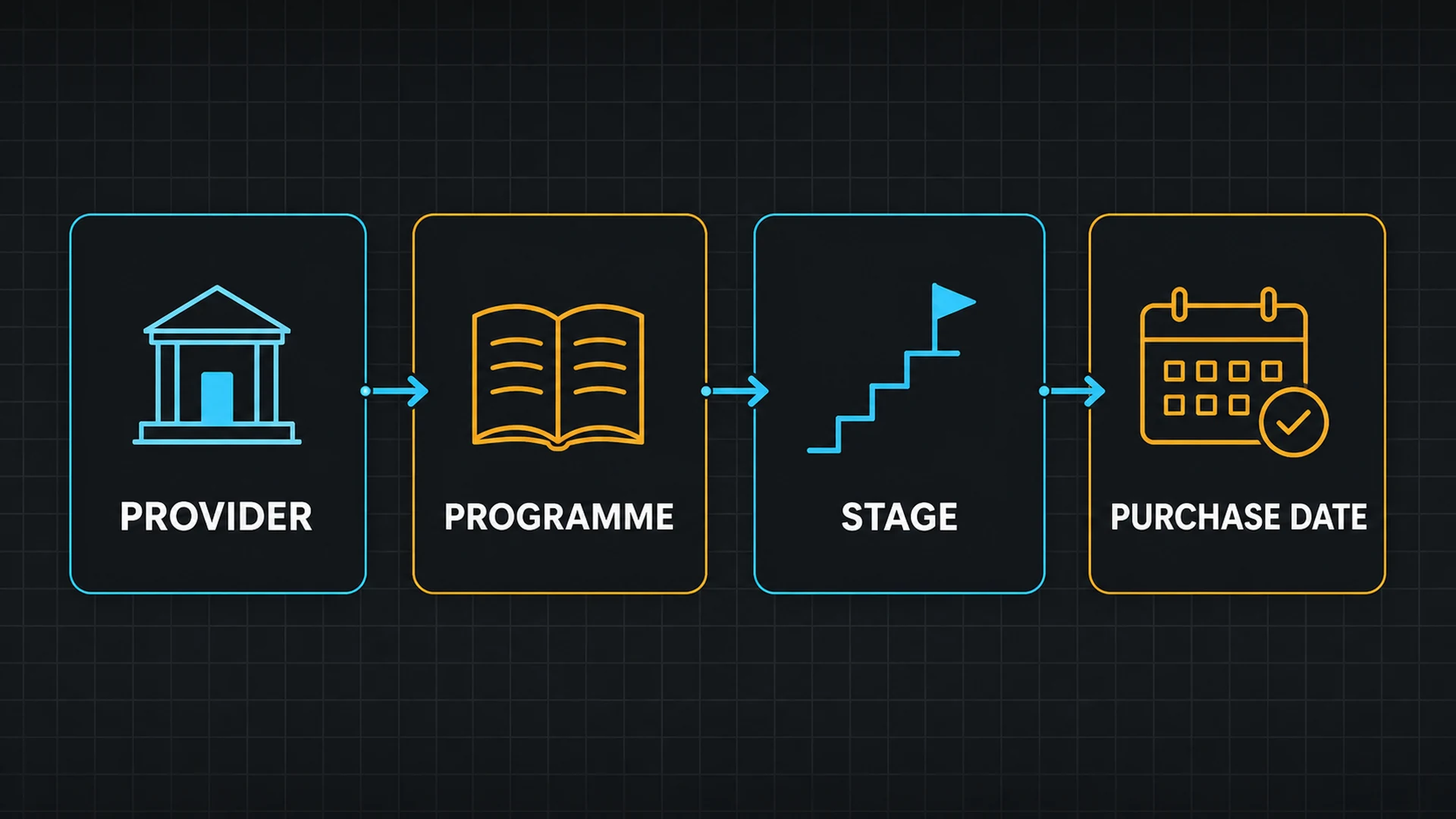
Which provider programme stage and purchase date apply?
Section answer: Build an identity record containing the provider, exact product or programme, current stage and any selected path. Add purchase or activation dates only when evidence makes them relevant. Mask identifiers, exclude credentials and write
DATA_NOT_AVAILABLEwherever a field cannot be proved.
Phoenix Trader Funding’s current page displays Classic, Spark and Merit across evaluation, funded and Live stages. FTMO’s current Trading Objectives page distinguishes rules for the FTMO Challenge: 1-Step, its subsequent FTMO Account, and the separate 2-Step evaluation phases. Those distinctions make “my funded account” too vague.
Identity field: Provider · Entry: Exact public name · Evidence status: Confirmed / unresolved
Identity field: Product or programme · Entry: Exact account label · Evidence status: Confirmed / unresolved
Identity field: Current stage · Entry: Provider-defined label · Evidence status: Confirmed / unresolved
Identity field: Selected path · Entry: Exact path, if applicable · Evidence status: Confirmed / not applicable
Identity field: Purchase date · Entry: Date or DATA_NOT_AVAILABLE · Evidence status: Evidence required
Identity field: Activation date · Entry: Date or DATA_NOT_AVAILABLE · Evidence status: Evidence required
Identity field: Account reference · Entry: Masked value only · Evidence status: Never publish
Once the account is named precisely, freeze the supporting material in a dated evidence card rather than relying on memory.
A prompt can organise provider, programme, stage, date and source questions. It cannot certify a rule, interpret an individual agreement or turn missing account evidence into a reliable answer. The registered AI Co-Pilot page provides relevant educational context for verification-led decision support with explicit uncertainty controls. Explore verification-led AI education gives the relevant next learning step.
Build a Dated Evidence Card
Which fields preserve rule versions without guessing?
Section answer: Record the page title, URL, provider, programme, stage, exact rule label, displayed update marker and retrieval date. Keep publication, update, effective, purchase, activation and support-response dates separate. Never turn a relative update label or retrieval timestamp into an invented effective date.
The source formats differ. Phoenix Trader Funding displays an absolute update date of 17 August 2026. Blueberry Funded and Topstep display relative update labels on the pages reopened for this article. The shared retrieval date is 24 August 2026, which proves observation on that date only.
Evidence-card fields
- Exact page title, URL and provider.
- Programme, stage, selected path and account-version qualifier.
- Exact rule label, calculation basis and stated consequence.
- Displayed update marker and machine metadata, stored separately.
- Retrieval date and capture method.
- Purchase, activation and effective dates, each supported or
DATA_NOT_AVAILABLE. - Private account-evidence location and masked reference.
- Conflict status:
MATCHED,DIFFERENTLY_LABELLEDorUNRESOLVED.
A hash can show whether your saved copy changed; it cannot prove that the provider’s live page stayed unchanged. The dated card now enables a controlled comparison.
Compare Like With Like
How can rules be compared without merging programmes?
Section answer: Hold the provider, programme, stage, path and relevant version context constant. Classify wording as unchanged, changed, differently labelled or unresolved. Keep every percentage, formula and consequence attached to its provider-defined calculation; similar words across providers do not establish equivalent rules.
Blueberry Funded currently states that its named 1-Step and Flex 1-Step products carry no consistency rule, while describing a separate Flex profit-concentration check. Phoenix Trader Funding describes consistency percentages that vary by programme and stage. These provider-specific statements cannot be transplanted to another account.
Provider context: Blueberry Funded 1-Step / Flex 1-Step · Current first-party wording used here: No consistency rule; separate Flex check · Audit boundary: Named products only
Provider context: Phoenix Classic evaluation · Current first-party wording used here: 50% consistency table entry · Audit boundary: Phoenix Classic evaluation only
Provider context: Phoenix Spark funded · Current first-party wording used here: 30% consistency table entry · Audit boundary: Phoenix Spark funded only
Provider context: Topstep Trading Combine · Current first-party wording used here: 50% Consistency Target · Audit boundary: Keep separate from funded path
Provider context: Topstep Express Funded, Consistency path · Current first-party wording used here: 40% or lower objective and three trading days · Audit boundary: Chosen path only
Provider context: FTMO Challenge: 1-Step and FTMO Account: 1-Step · Current first-party wording used here: 50% Best Day Rule using Positive Days’ Profit · Audit boundary: FTMO 1-Step contexts only
If a difference survives that comparison, it is an account-specific ambiguity, not permission to generalise from another provider.

Treat uncertainty as a stop condition. Record what is missing, avoid forcing a conclusion and wait for the exact provider or account evidence before relying on a rule interpretation. The registered Trading Psychology collection provides relevant education on discipline, mindset and accountable waiting. Explore discipline and mindset education gives the relevant next learning step.
Ask Official Support Precisely
What should official provider support confirm for you?
Section answer: Ask official support to confirm the rule for your named programme, current stage, selected path and relevant purchase or activation context. Include a masked account reference, exact page title, retrieval date and precise conflict. Save the reply as dated provider evidence, not independent proof.
Blueberry Funded’s current page tells uncertain users to check their dashboard or contact the provider to confirm the account type. No account-specific support response from Blueberry Funded, Phoenix Trader Funding, Topstep or FTMO was accessed for this article, so no personal applicability conclusion is available.
Please confirm which version of [rule label] applies to my masked account [reference]. The account is [programme], currently at [stage/path], purchased or activated on [supported date or DATA_NOT_AVAILABLE]. The page [title and URL], retrieved 2026, differs from [account record]. Which wording should I record, and what dated source supports it?
Log the channel, case reference, exact question, complete reply, response date, linked policy and remaining uncertainty. A support reply is another dated layer; it does not automatically settle a contractual dispute.

Recheck the Exact Current Source
When must the evidence card be refreshed again?
Section answer: Refresh the card whenever the page title, update marker, programme, stage, path, calculation or intended account action changes. Reopen the exact official source before final use. If public wording and account-specific evidence still conflict, retain
UNRESOLVEDinstead of predicting an outcome.
All four first-party URLs used here were freshly reopened on 24 August 2026. That confirms their availability and wording at retrieval, not permanence. Provider-controlled pages can change later, and a saved screenshot remains dated historical evidence rather than an automatically current rule source.
Revalidation checklist
- The exact URL still opens and the title matches.
- Programme, stage and selected path remain identical.
- Update evidence and retrieval date are recorded separately.
- Calculation basis, threshold and consequence remain attached to their context.
- Account evidence still identifies the same programme and stage.
- Any provider response is dated and quoted accurately.
- Remaining conflicts are marked
UNRESOLVED.
Interactive reflection: Can you name the provider, programme, stage, purchase evidence and retrieval date for the last rule page you saved? If one field is missing, your note is a memory aid, not yet a rule-version audit.
Which provider, programme, stage or dated evidence field remains unresolved?
Which evidence layer still needs verification?
Sources
- Blueberry Funded — Blueberry Funded — 1-Step consistency rules (reviewed 2026-08-24)
- Phoenix Trader Funding — Phoenix Trader Funding — consistency rule by programme and stage (reviewed 2026-08-24)
- Topstep — Topstep — Trading Combine and Express Funded consistency (reviewed 2026-08-24)
- FTMO — FTMO — Trading Objectives (reviewed 2026-08-24)
Risk warning: Scalping Wolf Live provides trading education, mentorship, and live analysis content for informational purposes only. Nothing published by Scalping Wolf Live constitutes financial advice, investment advice, or a recommendation to buy or sell any financial instrument. Trading foreign exchange and derivatives carries significant risk of loss and is not suitable for all investors. Past performance shown in live sessions or case studies is not indicative of future results. You are solely responsible for your own trading decisions.
FAQs
Do current prop-firm pages govern older accounts automatically?
Does purchase date always decide which rules apply?
What is a rule-version evidence card?
Are consistency percentages comparable across different providers?
What if provider support conflicts with my agreement?
When should I reopen the official rule page?
A fixed checking sequence reduces improvisation: identify the account, preserve the evidence, compare like with like and stop when a material field is unresolved. It remains education, not a provider ruling or trade instruction. Scalping Wolf Live’s registered Wolf Strike page provides a relevant example of rules-led process education. Review rules-led process education gives the relevant next learning step.
