





Weekly Market Review: Record Data Revisions, Not Just First Headlines
Weekly Market Review: Record Data Revisions, Not Just First Headlines
Read the current evidence, preserve the original record and keep the conclusion within what the source supports.

On this page

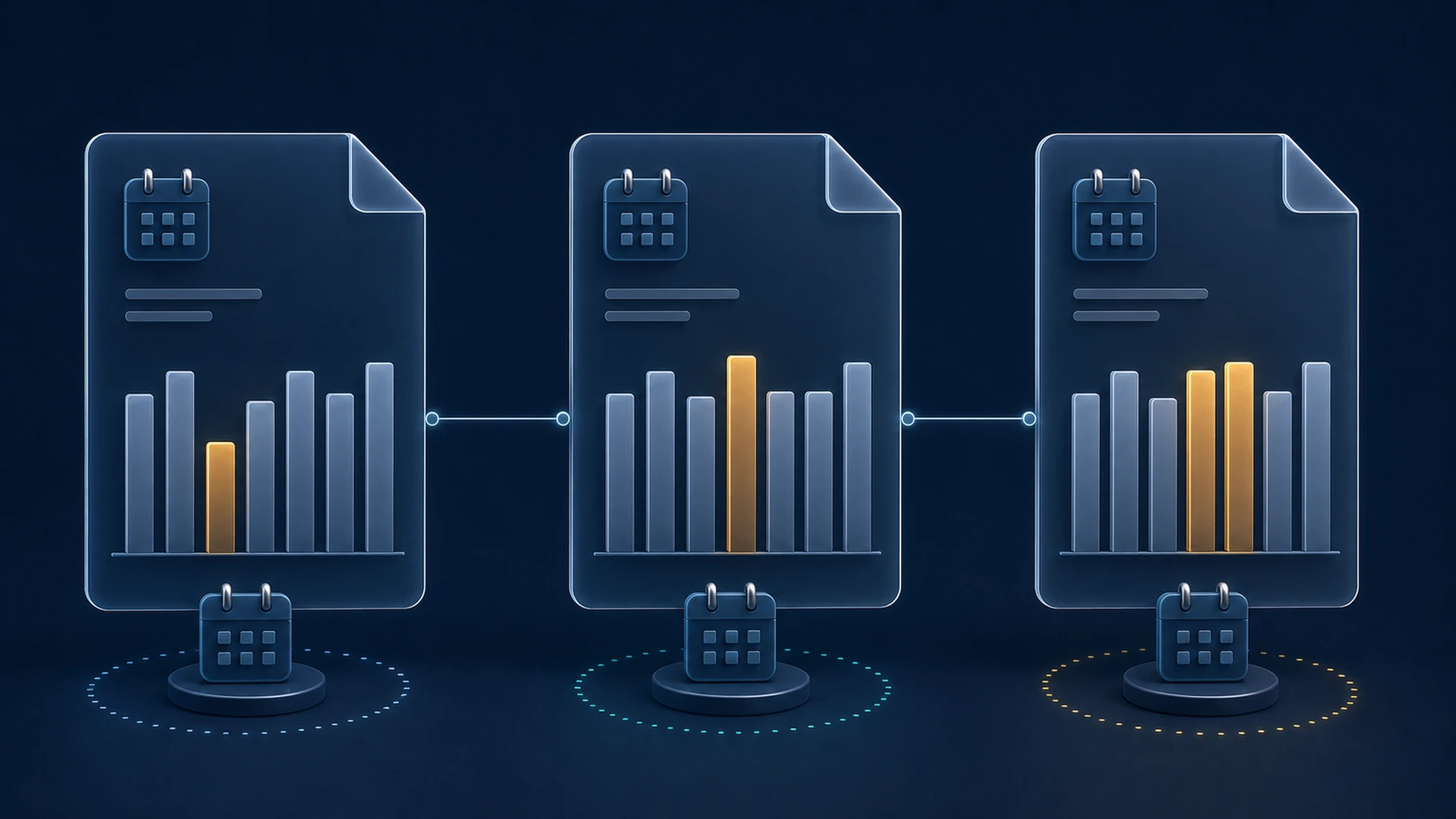
A weekly market data revision review should preserve the first estimate and every later official data vintage as separate records. Capture the series, reference period, published value, native release timestamp, retrieval time, publisher label and direct source. Compare each conclusion with the information available at that moment, keep missing fields visible and never use a later figure to rewrite the earlier evidence.
- Preserve the original source record.
- Record every later official vintage.
- Keep missing evidence explicitly unknown.
- Do not infer market causation from a revision.
Scalping Wolf Live provides trading education that helps readers organise evidence and review their process consistently. A version-aware ledger separates official data from personal interpretation. It supports disciplined learning; it does not predict outcomes, validate trades or establish market performance. The main Scalping Wolf Live site is the registered first-party starting point for its education-led context. Explore the Scalping Wolf Live education site gives the relevant next learning step.
# Weekly Market Review: Record Data Revisions, Not Just First Headlines

Preserve The First Estimate
Why must the first official estimate remain visible?
Keep the first estimate because it records the official information available at the initial publication point. Add later values beside it rather than overwriting it. This preserves the evidence set behind your original note and lets you distinguish a reasonable contemporaneous judgement from a cleaner story created after more information arrived.
Evidence — layer two: The U.S. Bureau of Labor Statistics says its first preliminary Current Employment Statistics estimate is released about three weeks after the reference period and revised twice before annual benchmarking. That documented sequence makes each release a distinct vintage; it does not make the preliminary estimate useless or careless.
Data layer — layer three: Start every recurring series with a small identity card:
Field: Series and period · Record: Official wording · Boundary: Keep definitions separate
Field: First value · Record: Published figure and unit · Boundary: Never reconstruct from memory
Field: Native release time · Record: Date, time and offset · Boundary: Never relabel
Field: Retrieval record · Record: Access time and URL · Boundary: Proves retrieval only
Practice — layer four: Freeze the first row. Record transcription repairs separately, leaving the official release unchanged. This separates your correction from the publisher’s revision.
Claim ceiling: The timing and two revisions describe the named Current Employment Statistics process only. They do not apply to every labour series, predict a later value or establish a market response.
Bridge — layer five: With the first vintage safe, label changes without inventing motives.
Classify Each Official Change
How should revisions and corrections be labelled?
Copy the relevant publisher’s label before interpreting a changed value. A revision can reflect additional data or improved methods, while a correction can respond to an identified mistake. Because agencies use their own policies, keep an unknown state for any change whose official classification or reason you cannot verify.
Evidence — layer two: The Office for National Statistics separates quality-improving revisions from corrections of identified errors. Eurostat classifies revisions as routine, major or unscheduled. These official taxonomies support careful labelling, but neither allows an unexplained change elsewhere to be assigned a cause.
Data layer — layer three: Use a controlled classification sequence:
- Copy the publisher’s term and definition link.
- Record its stated reason without strengthening it.
- Note whether value, period, method or text changed.
- Use
CLASSIFICATION_UNKNOWNwhen the record is silent. - Keep interpretation separate.
Practice — layer four: Describe the change and publisher’s reason without calling every change a mistake. Otherwise, record “reason not established”.
Claim ceiling: Office for National Statistics and Eurostat terminology belongs to their respective systems. It does not establish the classification, quality or intent of an unnamed release from another publisher.
Bridge — layer five: A label needs the series timetable and possible later inputs.
Discipline helps a reviewer preserve the first record, reopen the official source and leave unsupported conclusions unresolved. It does not make an interpretation correct or turn a journal process into evidence of future results. Scalping Wolf Live’s psychology collection is a relevant next step for practising non-impulsive review behaviour. Continue with discipline-led education gives the relevant next learning step.
Read The Revision Policy
What can a revision timetable actually establish?
A revision policy can establish the publisher’s expected release sequence, timing, revision windows and possible information flows. It helps you schedule follow-up checks and understand why fuller vintages may exist. It cannot reveal the future size or sign of a revision, and one series’ timetable should not be borrowed for another.
Evidence — layer two: The Office for National Statistics national accounts policy says first quarterly UK gross domestic product estimates appear around six weeks after quarter end, with fuller quarterly accounts around twelve to thirteen weeks. It also explains that linked data areas can lead to revisions elsewhere in national accounts.
Data layer — layer three: Attach four policy fields to each recurring series:
- Sequence: official preliminary, later or benchmarked wording.
- Timing: stated release or revision window.
- Dependencies: linked components named by methodology.
- Limits: what the policy omits.
Practice — layer four: Schedule reviews from timetables. Append and cite vintages, treating linked inputs as possibilities without assuming component or direction.
Claim ceiling: The six-week and twelve-to-thirteen-week timings apply to the described UK national-accounts cycle. Linked integration neither guarantees revisions across every series nor supports a forecast.
Bridge — layer five: Policy schedules the check; an append-only ledger preserves each finding.

Build A Vintage Ledger
Which fields make a vintage ledger reconstructable?
A reconstructable vintage ledger uses one immutable row per official value and records the observation, vintage, exact value, unit, native timestamp, retrieval time, source, change label and claim ceiling. It also links each later row to its predecessor. Missing fields remain explicit, while interpretation stays separate from the sourced record.
Evidence — layer two: Eurostat’s vintage metadata describes a vintage database as a repository of real-time data available at a particular point. Its tables include a revision-date dimension and store a new vintage when a value changes or a new value appears, illustrating history through separate states.
Data layer — layer three: Practical vintage-ledger workflow
Step: 1. Identify · Action: Publisher, series, unit, period · Output: Observation key
Step: 2. Capture · Action: Value, timestamp, URL, retrieval · Output: Immutable vintage
Step: 3. Classify · Action: Publisher wording or UNKNOWN · Output: Change label
Step: 4. Append · Action: Link new row to predecessor · Output: Preserved sequence
Step: 5. Compare · Action: Verified arithmetic · Output: Neutral difference
Step: 6. Review · Action: Original note versus lesson · Output: Visible hindsight
Step: 7. Audit · Action: Gaps and next check · Output: Open-evidence list
Practice — layer four: Preserve native timestamps and offsets, adding BST (+01:00) alongside. Stable series, period and vintage identifiers separate journal corrections from official revisions.
Claim ceiling: Eurostat’s database model demonstrates its method of storing availability through time. It does not prescribe every private journal format or prove what any individual saw or used.
Bridge — layer five: Preserved vintages support comparison when later knowledge stays separate.

Start with the current official rule source, then preserve the earliest verifiable wording, timestamp and later change. Do not reconstruct a missing rule from memory. A rules-focused educational guide can provide context, but the official provider remains authoritative. Scalping Wolf Live’s registered prop-trading guide offers a practical educational context because programme rules and terms can change. Continue with the Prop Trading Guide gives the relevant next learning step.
Compare Without Hindsight
How can later vintages be compared fairly?
Freeze the original note and evidence set before comparing a later vintage. Describe the arithmetic difference and the publisher’s label, then write any new learning in a separate field. Judge the earlier process only against information available then. Historical revision measures provide context, not a template for the next update.
Evidence — layer two: The U.S. Bureau of Economic Analysis publishes advance, second and third current quarterly gross domestic product vintages. For 1996–2024 estimates, it reports historical average absolute revisions of 0.5 percentage points from advance to second, 0.6 from advance to third and 0.3 from second to third.
Data layer — layer three: Run three separate views:
View: Contemporaneous · Evidence allowed: Original-timestamp material · Honest question: Was the note evidence-bounded?
View: Revision · Evidence allowed: Original plus named later vintage · Honest question: What officially changed?
View: Learning · Evidence allowed: Both records and limitations · Honest question: Which review rule should change?
Practice — layer four: Absolute revision measures describe magnitude, not sign. Never turn historical averages into one-quarter expectations. Price studies need separate evidence; ledgers cannot explain markets.
Interactive reflection: Reopen one conclusion. Which vintage supported it then, and which facts appeared later? Write both evidence sets separately. Keep both. If the earlier note needs later evidence, mark the hindsight instead of editing history. This keeps the chronology visible and turns hindsight into a process record for later review.
Claim ceiling: The three-vintage sequence and historical averages describe the named Bureau of Economic Analysis comparisons. They do not forecast a future revision, establish an error threshold or imply price direction.
Bridge — layer five: Fair comparison exposes gaps that should remain unresolved evidence.
Audit Missing Evidence
What should unresolved evidence stop you concluding?
Unresolved evidence should stop conclusions about a change’s reason, predictability, direction, effect or performance relevance. Record the missing field, pages checked, retrieval result and next verification point. Do not convert absence into zero, unchanged data or proof of anything. A visible unknown is a useful analytical state.
Evidence — layer two: Eurostat’s revision policy describes revision as a normal statistical process intended to improve quality and says revisions should follow transparent procedures. That supports looking for reasons and schedules. It does not guarantee that every desired field is available or that your private record is complete.
Data layer — layer three: Close each review with a missing-evidence audit:
- Verify the official URL, series and period.
- Preserve native timestamp and retrieval time.
- Compare vintages without overwriting either.
- Record the publisher’s label or
DATA_NOT_AVAILABLE. - Log failed retrievals, not unchanged statistics.
- Separate facts, contemporaneous notes and interpretation.
- Mark lessons supported, contradicted or unresolved.
Practice — layer four: Ask what evidence weakens your story. Revisions challenge exception claims; corrections challenge claims nothing happened; absent timestamps prevent chronology. None selects trades.
Claim ceiling: A transparent revision policy supports careful documentation within its scope. It does not prove that another publisher followed the same process, that your ledger is complete or that a revision caused a market outcome.
Bridge — layer five: Preserve each vintage, label uncertainty and leave unsupported conclusions open.
Your Next Three Moves
- Now: Create observation, vintage, timestamp, source, label and claim-ceiling fields.
- Next review: Rebuild one history without deleting its earliest verified row.
- This week: Audit one conclusion and mark unsupported links
UNRESOLVED.
Frequently Asked Questions
Why can a first official estimate change later?
A first estimate may change when a publisher receives additional data, improves methods or completes a scheduled revision process. The exact reason depends on the named authority and series. Preserve the first vintage and consult its policy; a later number does not by itself show that the first publication was an error.
What is a data vintage in weekly review?
A data vintage is the official information available at a particular point in time. Record each vintage with its value, unit, source and timestamp. This reconstructs the publication sequence, but it does not establish how all market participants received the information or what conclusions they drew from it.
How should an unexplained changed value be labelled?
Use the publisher’s exact term when available. If the official source does not classify the change or state a reason, label it CLASSIFICATION_UNKNOWN or DATA_NOT_AVAILABLE. Keep your interpretation separate. A visible change alone cannot support an allegation about intent, quality or market effect.
Can historical revision averages predict future revisions?
No. Historical averages summarise earlier differences for a named series, period and vintage comparison. They do not forecast the size or sign of the next revision. Use them as descriptive context only, and retain the individual observation’s policy, timestamp and limitations in your ledger.
Which timestamps belong in the evidence ledger?
Preserve the publisher’s native release timestamp and original offset when supplied, then record your retrieval time separately. You may add a BST (+01:00) conversion alongside the native time. These fields answer different questions and should not be merged, relabelled or inferred when the source omits them.
Does a complete vintage ledger prove trading skill?
No. A complete ledger can improve traceability by showing which official value was available and when. It cannot prove that an interpretation was correct, explain a market move, validate a decision or establish performance. Its proper role is disciplined educational review with explicit evidence limits.
Public author: Raheel Ahmed Rathore. Research support: Sadaf Javed — Digital Media Team, SHC Group.

Which source, timestamp, assumption or limitation must remain visible before you review this evidence?
Can a reader reconstruct the source, timestamp and limitation for this conclusion?
Sources
- Office for National Statistics — The Office for National Statistics Revisions Policy and Correction of Errors Policy (reviewed 2026-08-22)
- Office for National Statistics — National Accounts Revisions Policy updated January 2026 (reviewed 2026-08-22)
- U.S. Bureau of Labor Statistics — Nonfarm Payroll Employment Revisions between over-the-month estimates (reviewed 2026-08-22)
- U.S. Bureau of Economic Analysis — Gross Domestic Product Release Additional Information (reviewed 2026-08-22)
- Eurostat — Data revision policy (reviewed 2026-08-22)
- Eurostat — Euro indicators vintages of data metadata (reviewed 2026-08-22)
FAQs
Why can a first official estimate change later?
What is a data vintage in weekly review?
How should an unexplained changed value be labelled?
Can historical revision averages predict future revisions?
Which timestamps belong in the evidence ledger?
Does a complete vintage ledger prove trading skill?
Yes. A beginner can start with the series, reference period, first value, later value, label, source and timestamps. The table supports traceability but does not prove a causal market story or trading skill. Scalping Wolf Live’s introductory forex guide provides a registered educational foundation for that practice. Build forex foundations with Scalping Wolf Live gives the relevant next learning step.
