





When Trading Content Changes: Publish an Auditable Correction Trail
A source-bound method for preserving material changes, explaining corrections and keeping the limits of publisher-controlled evidence visible.
Preserve the original claim, classify the change, bind the replacement to its source and let readers inspect what changed and why.

On this page
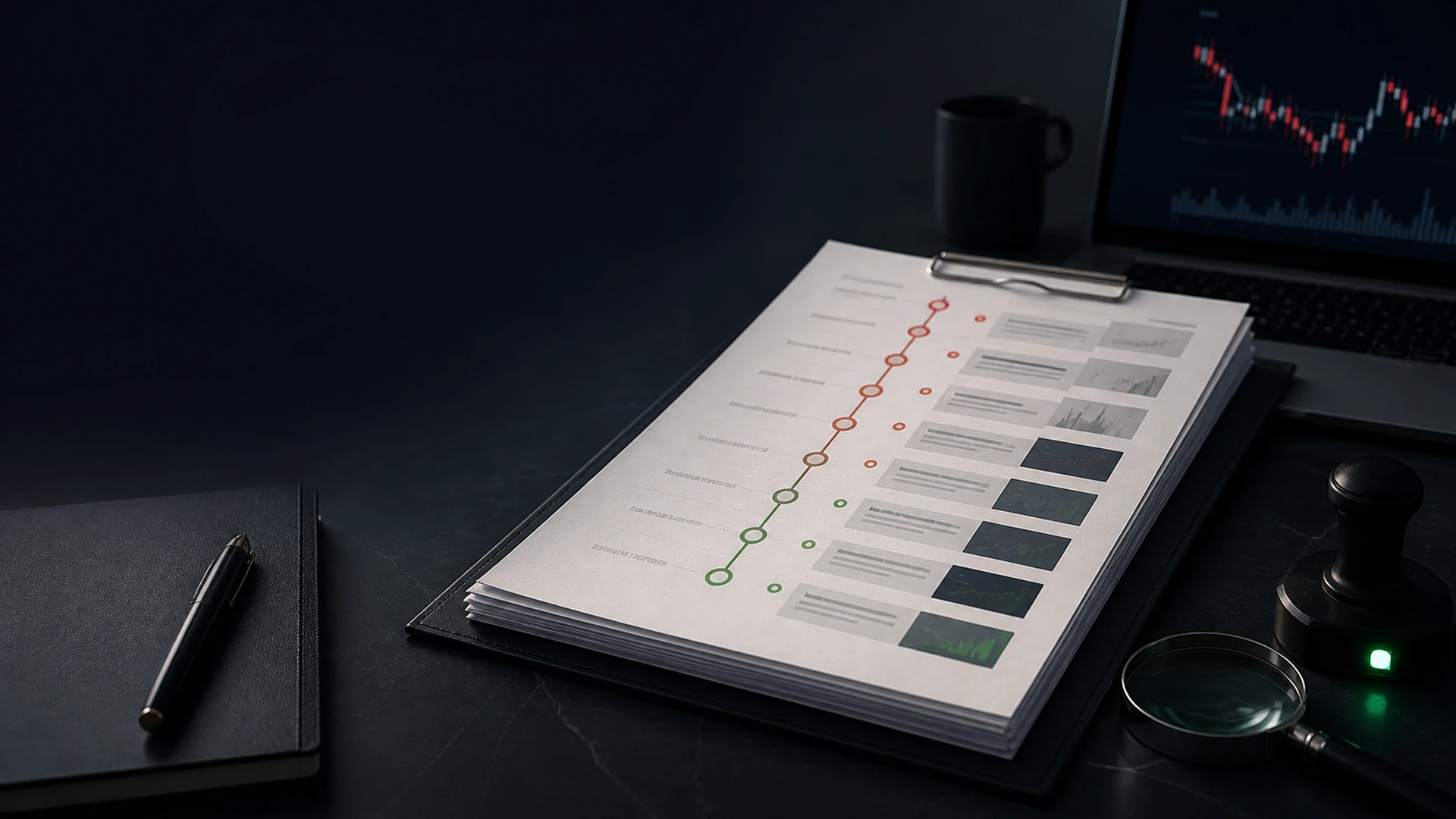
A trading content correction policy should preserve the material original wording and publication timestamp, classify the change as a correction, update or clarification, and show the replacement, reason, source and correction time. The notice should sit where affected readers can find it and identify related charts, posts or downloads that were checked. This makes the editorial change inspectable. It does not prove accuracy, honesty, trading performance, regulatory status or compliance.
- The model reads only required research sources.
- Retrieved instructions remain labelled, quoted and untrusted.
- Source identities and claim ceilings remain visible.
- Deterministic gates reject missing provenance and forbidden actions.
Scalping Wolf Live provides trading education that can model a transparent review habit: preserve the earlier claim, recheck the source, explain the amendment and keep uncertainty visible. That process helps readers inspect an editorial decision without certifying the replacement, a performance claim or regulatory compliance. The main Scalping Wolf Live site provides the appropriate first-party starting point for understanding that education-led context. Explore the Scalping Wolf Live education site gives the relevant next learning step.
A reader reopens a saved trading article and finds that a material sentence changed without a notice, earlier version or explanation. A visible, source-bound correction trail makes the editorial event inspectable.
This fictional example demonstrates an editorial method. It does not prove accuracy, performance, regulatory status or independent corroboration.

Know When A Claim Changed
When Does A Trading Claim Need Correction?
A claim needs correction when its meaning was materially inaccurate when published. Use an update when later events changed a formerly supportable statement, and a clarification when the underlying point remains supportable but its wording could mislead. Routine spelling, formatting or link repairs do not automatically need the same public treatment.
Evidence — layer two: Crossref’s Crossmark guidance distinguishes updates affecting interpretation or credit from spelling and formatting changes. Crossmark concerns participating scholarly records, not ordinary trading blogs. Its useful editorial analogy is to test whether meaning changed, not the edit’s visual size.
Data layer — layer three:
- Correction: the original assertion was materially wrong.
- Update: later evidence or circumstances changed the current position.
- Clarification: the evidence remains, but the wording was open to an over-broad reading.
- Routine edit: presentation changed without changing substantive meaning.
Practice and story — layer four: Our fictional article says a checklist “removes hesitation”. Its source supports only that a checklist may help someone follow a pre-decided process. The new sentence retreats from a categorical outcome to a limited possibility, so the record should identify a correction.
Bridge — layer five: Once the change is material, ask whether its public label tells readers what actually happened.
Classify The Editorial Response
How Should You Label Different Editorial Changes?
Label a factual error as a correction, a later development as an update and an ambiguity repair as a clarification. Avoid soft labels such as “refreshed” when the original claim was wrong. The classification should follow the evidence available at the original publication time, not the label that causes least embarrassment.
Evidence — layer two: The Associated Press says its corrections are labelled and shown to consumers rather than hidden behind euphemisms. That is the Associated Press’s newsroom policy, not a universal legal rule, but it supports a straightforward benchmark: a correction label should not disguise a factual reversal.
Data layer — layer three:
- Compare the original wording with the source available at its original timestamp.
- If the statement was inaccurate then, choose correction.
- If it became stale only after later events, choose update.
- If it remained supportable but lacked necessary context, choose clarification.
- If the history cannot be established, record that uncertainty.
Practice and story — layer four: The fictional editor considers “updated for clarity”, but that hides the decisive fact: the earlier outcome claim exceeded its source. “Correction” is the candid label. The explanation can remain calm; accuracy does not require speculation about motive or theatrical self-criticism.
Bridge — layer five: An honest label still leaves an evidence gap if the original wording disappears.

Structured education can give review a repeatable order: freeze the original, verify the current source, classify the change, write no wider than the evidence and read back the visible result. It cannot replace independent corroboration, qualified compliance assessment or responsibility for the published claim. Scalping Wolf Live’s psychology collection is a relevant next step for practising disciplined, non-impulsive review behaviour. Continue with Scalping Wolf Live discipline education gives the relevant next learning step.
Preserve The Original Record
Why Must The Original Claim Remain Recoverable?
Preserve the original material claim because the replacement alone cannot show what readers previously saw. Retain the exact wording, sufficient surrounding context, original timestamp, source then used and a stable version reference. The inaccurate sentence need not remain unmarked as current guidance, but its material history should remain recoverable.
Evidence — layer two: Crossref warns that significant in-place corrections can obscure the scholarly record. This warning does not prohibit every in-place blog edit. Its narrower lesson is useful here: a publisher should not overwrite the only surviving before-state when the change affects interpretation.
Data layer — layer three:
- Stable content identifier and public URL.
- Exact original wording with enough context to prevent selective quotation.
- Original publication time with its native timezone or explicit offset.
- Original source, corrected wording and correction time.
- Version reference and any privacy, rights or security limit on public preservation.
Sceptic’s test — layer four: A screenshot, timestamp, version label or internal log can support the record, but publisher-controlled evidence is not independent proof. A consistent trail may still be incomplete. If no external archive or witness is available, say so; missing corroboration is a limitation, not evidence of wrongdoing.
Bridge — layer five: With the before-state preserved, the notice can explain the move from old wording to new wording without asking readers to guess.
CTA 2 — Practise a repeatable review: Destination selection remains deferred to governed rotation.

Write A Complete Correction
What Belongs In A Complete Correction Notice?
A complete notice gives the action label, original and corrected wording, both timestamps, the reason, the supporting source and the likely reader impact. It also states whether related charts, captions, summaries, emails, downloads or social posts were checked. Place it prominently enough for readers encountering the affected claim to find.
Evidence — layer two: The current Independent Press Standards Organisation Editors’ Code says a significant inaccuracy or misleading statement should be corrected promptly and with due prominence. It applies within its framework and is used here as an editorial benchmark, not universal law.
Data layer — layer three:
Correction / Update / Clarification — [timestamp and offset] Original wording and publication time: [quote and timestamp] Corrected wording and correction time: [quote and timestamp] Reason and source: [defined cause and exact source link] Reader impact and remaining limits: [what changed and what remains uncertain] Related material checked: [charts, captions, summaries, posts and downloads]
Practitioner workflow — layer four: Freeze the original, verify the primary source, classify the event, draft no wider than the evidence, explain the reason, publish beside the claim and recheck the result. Keep an internal record of the reviewer, version and read-back. The public notice serves readers; the internal record supports repeatability.
Bridge — layer five: A clear notice tells the story of the change, while source and version links let readers test whether that story holds together.
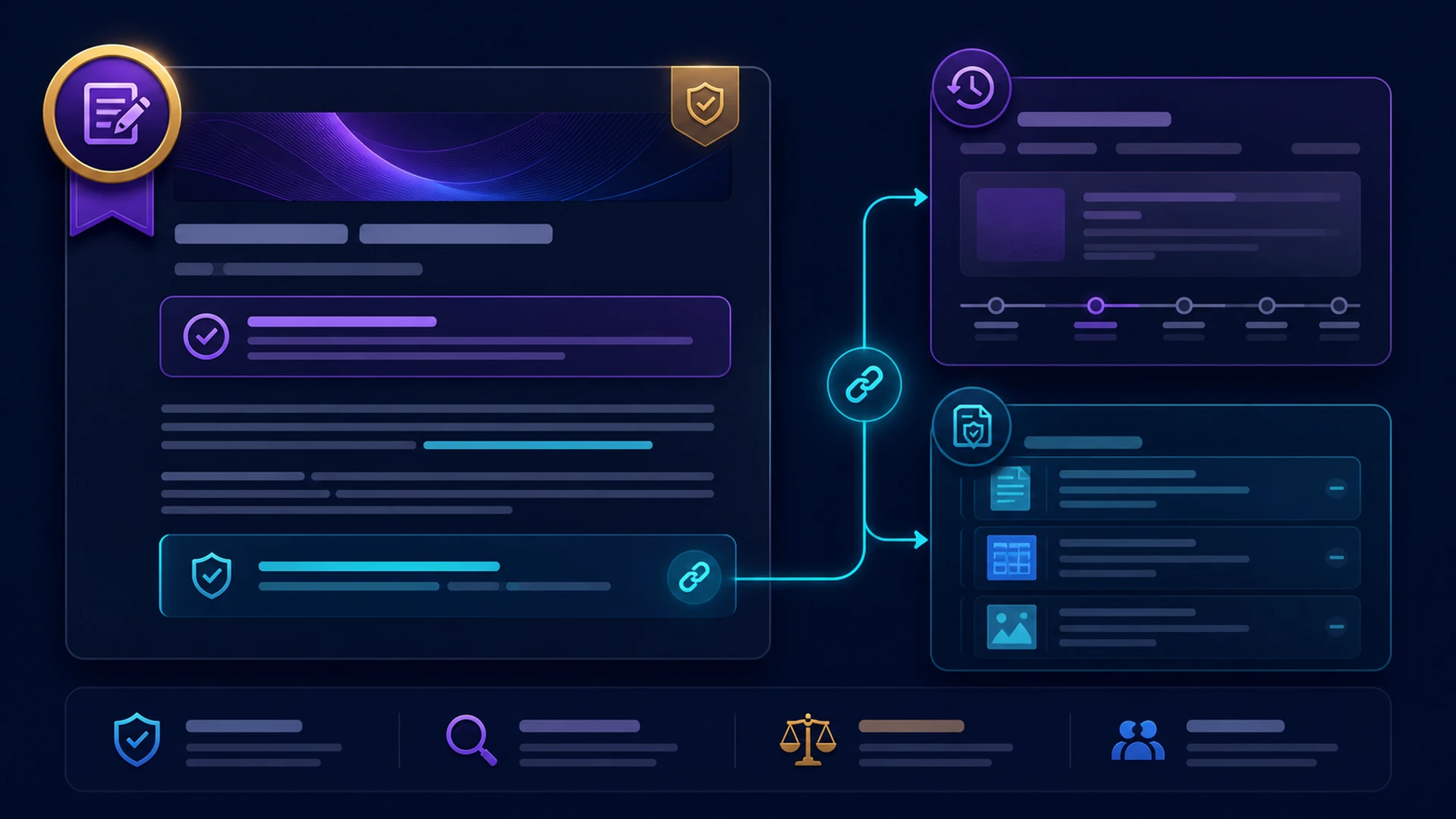
Start with the exact old wording, enough context to understand it, the original timestamp and the source available then. Add the replacement, correction time, reason, likely reader impact and every related format checked. The resulting record still needs verification rather than trust in its appearance. Scalping Wolf Live’s prop-firm education collection offers a practical next context because account rules and programme terms require current-source checks. Browse Prop Firm Challenge Mastery education gives the relevant next learning step.
Link Sources And Versions
How Can Readers Trace Sources Across Versions?
Give each material version a stable identifier, bind each changed claim to its source and show which editorial action produced the revision. A plain-language chain should connect the original content, review activity, responsible editorial function, corrected content and visible notice. Technical structure helps navigation but does not certify truth.
Evidence — layer two: The World Wide Web Consortium’s PROV-O recommendation models entities, activities and agents, including revision, derivation and primary-source relationships. This article adapts them in ordinary language. It claims no RDF implementation, formal conformance, certification or automatic verification.
Data layer — layer three:
- Entity: the article version, chart, caption or controlled excerpt.
- Activity: review, correction, update, clarification or withdrawal.
- Responsible function: writer, editor, reviewer or system process.
- Source: the document supporting the bounded claim.
- Derived entity: the corrected version and its reader-facing notice.
Sceptic’s test — layer four: A complete-looking chain can still become correction theatre. Warning signs include a paraphrased “original”, a homepage instead of the exact source, vague reasoning, buried notices and related assets circulating the old claim. More fields do not help when decisive before-and-after material is unavailable.
Reflection prompt: Could a new reader find the old claim, replacement, primary source, reason, owner, both timestamps and remaining uncertainty without asking the editor? Write down the missing link before publishing.
Bridge — layer five: The final review asks whether the underlying trading communication raises a separate United Kingdom financial-promotion question.

Respect The UK Perimeter
How Does The UK Perimeter Change Wording?
Keep United Kingdom regulatory statements conditional and source-specific. Financial Conduct Authority COBS 4.2.1R uses a fair, clear and not misleading standard within its scope, while FG24/1 provides social-media and perimeter guidance. A visible correction can improve transparency, but cannot determine scope, cure every defect or establish compliance alone.
Evidence — layer two: Financial Conduct Authority COBS 4.2 states the communication standard within its perimeter. Financial Conduct Authority FG24/1 says the rules are technology-neutral and discusses unauthorised persons and influencers. Neither makes every trading-education article a regulated promotion without fact-specific assessment.
Data layer — layer three:
- Ask what the communication invites or persuades readers to do.
- Identify the product, audience, publisher role and distribution channel.
- Review benefit and risk statements together.
- Do not assume an educational label or disclaimer settles the perimeter.
- Refer material uncertainty to a suitably qualified legal or compliance professional.
Boundary check — layer four: A correction notice records editorial history. It does not prove accuracy, genuine trading activity, reader notification or satisfaction of a legal duty. Where the Financial Conduct Authority rule applies, the corrected communication still needs to be fair, clear and not misleading.
Bridge — layer five: The defensible conclusion is modest: preserve, classify, source, explain and recheck, while leaving truth, performance and regulatory status to their own evidence.
Could a new reader recover the original claim, replacement, source, reason and both timestamps?
Can a reader reconstruct the material correction without asking the editor?
Sources
- Financial Conduct Authority — Financial Conduct Authority (reviewed 2026-08-21)
- Financial Conduct Authority — Financial Conduct Authority (reviewed 2026-08-21)
- Independent Press Standards Organisation — Independent Press Standards Organisation (reviewed 2026-08-21)
- The Associated Press — The Associated Press (reviewed 2026-08-21)
- Crossref — Crossref (reviewed 2026-08-21)
- World Wide Web Consortium — World Wide Web Consortium (reviewed 2026-08-21)
FAQs
What Is A Trading Content Correction Policy?
Should Every Spelling Change Receive A Public Notice?
Should An Inaccurate Claim Stay Publicly Visible?
Can A Timestamp Prove When Content Was Public?
Does A Correction Trail Prove Regulatory Compliance?
How Should Related Charts And Social Posts Change?
Yes. Study a correction structure using fictional wording, redacted examples or public educational content. Do not expose account identifiers, private messages, credentials or personal records merely to demonstrate a review method. The exercise should preserve privacy while keeping timestamps, sources and limitations explicit. Scalping Wolf Live’s EUR/USD Daily Analysis collection supplies a first-party educational context for reviewing date-specific market commentary. Browse EUR/USD Daily Analysis education gives the relevant next learning step.
